Wednesday, August 24, 2016

Surplus Cheese and US Agricultural policy. Let's go to the graphs.

I don't see this surplus as a problem but an opportunity for more Queso dip!

The US government is buying 11 million pounds of cheese because no one else will
""There is way too much cheese in America, so the US Department of Agriculture is buying a massive amount of it. 
According to a release from the USDA, it will buy 11 million pounds — worth roughly $20 million by its estimate — and distribute it to food banks around the country."""
The US cheese market has had a significant oversupply problem for most of the year because foreign buyers have looked elsewhere for their dairy products as a result of the strong dollar. Before this slowdown in exports, many farmers had ramped up their production because of record-high prices."""
This situation presents another opportunity to "go to the graphs" to explain what is going on in the Market for Cheese.


Tuesday, August 23, 2016

"There is no profit in destruction***" said no media outlet ever. Louisiana Flood Edition...

***Frederic Bastiat.

Well, it has not happened yet, but wait for it...

Here is a satellite photo (from NYTimes) that shows "Louisiana at Night".  The bright white on the left shows the State as it normally is at night.  The one of the right shows it on August 15, 2016.

Notice the lack of electricity where it used to be plentiful?  Many areas have gone dark.  Devastation.


When damage is done to property, private or public, it has to be repaired or rebuilt. This will necessitate new/current purchases of goods and services.

This adds to Gross Domestic Product (GDP).  It looks like the economy is humming along.

But GDP accounting must include a subtraction to account for what was lost, right?  The added purchases are simply making us whole again, right?

Nope.  GDP includes only "new goods and services" purchased.

Now, businesses will sell less of some goods (demanded before the flood) and more of others (stuff to rebuild) so it could (not likely) come out even.

But you are likely to see a news report that suggests there is a "positive side" to this tragedy---employment and the buying of new stuff.  DON'T BE FOOLED!!

"""From which, by generalizing, we arrive at this unexpected conclusion: "Society loses the value of objects unnecessarily destroyed," and at this aphorism, which will make the hair of the protectionists stand on end: "To break, to destroy, to dissipate is not to encourage national employment," or more briefly: "Destruction is not profitable."""" Bastiat.


Wednesday, August 17, 2016

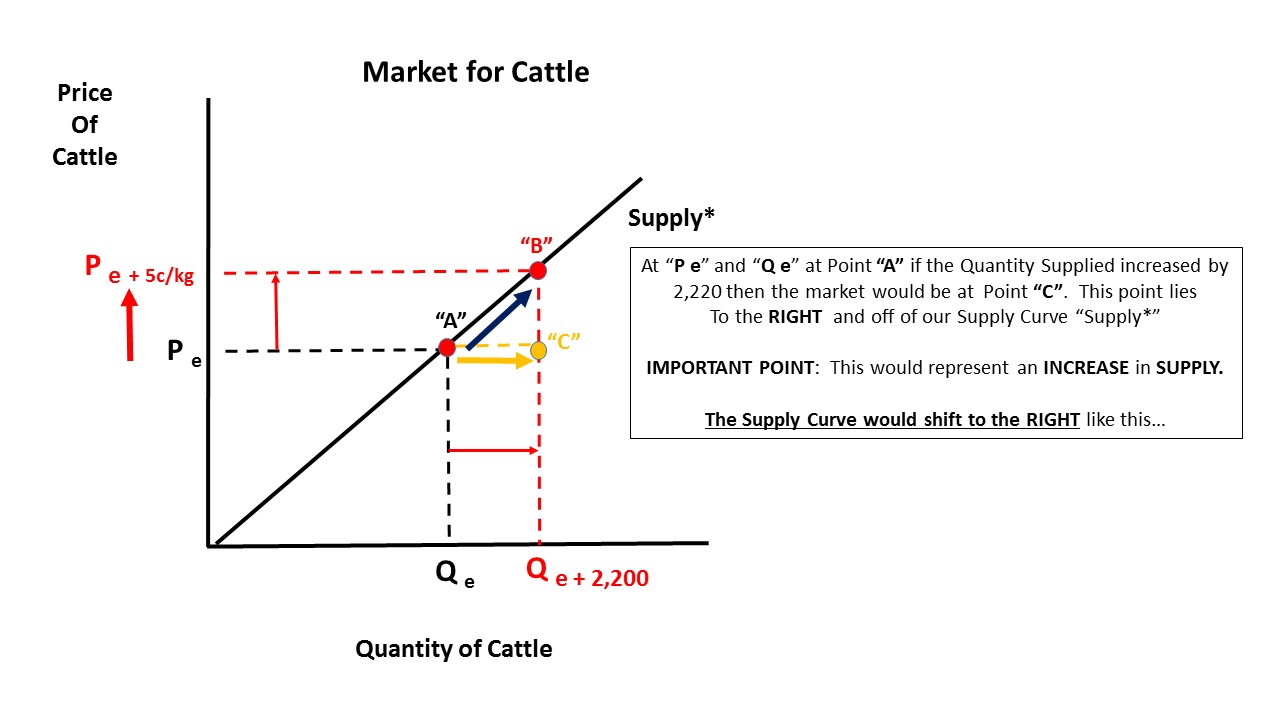
Market for Irish Cattle---Change in Quantity Supplied vs Change in Supply

One of the most frustrating things to teach AND learn in a basic microeconomics class is the difference between a change in Quantity Demanded and/or Supply and a change in Demand and/or Supply---whether we move along the respectived curve or the curve shifts entirely in one direction or the other.

This very short article from a website that reports on agricultural issues in Ireland provides a nice example on the supply side to illustrate the difference:
The number of prime cattle slaughtered at Department of Agriculture approved beef export plants has jumped 10% in the space of a week. 
Figures from the Department show that the throughput of young bulls, steers and heifers increased by just over 2,200 head last week compared to the week before. 
Towards the end of last week and into this week, factory buyers were willing to pay an extra 5c/kg on top of the base price in order to secure stock.And this move appears to have worked, as an additional 2,285 cattle were presented for slaughter during the week ending August 14.
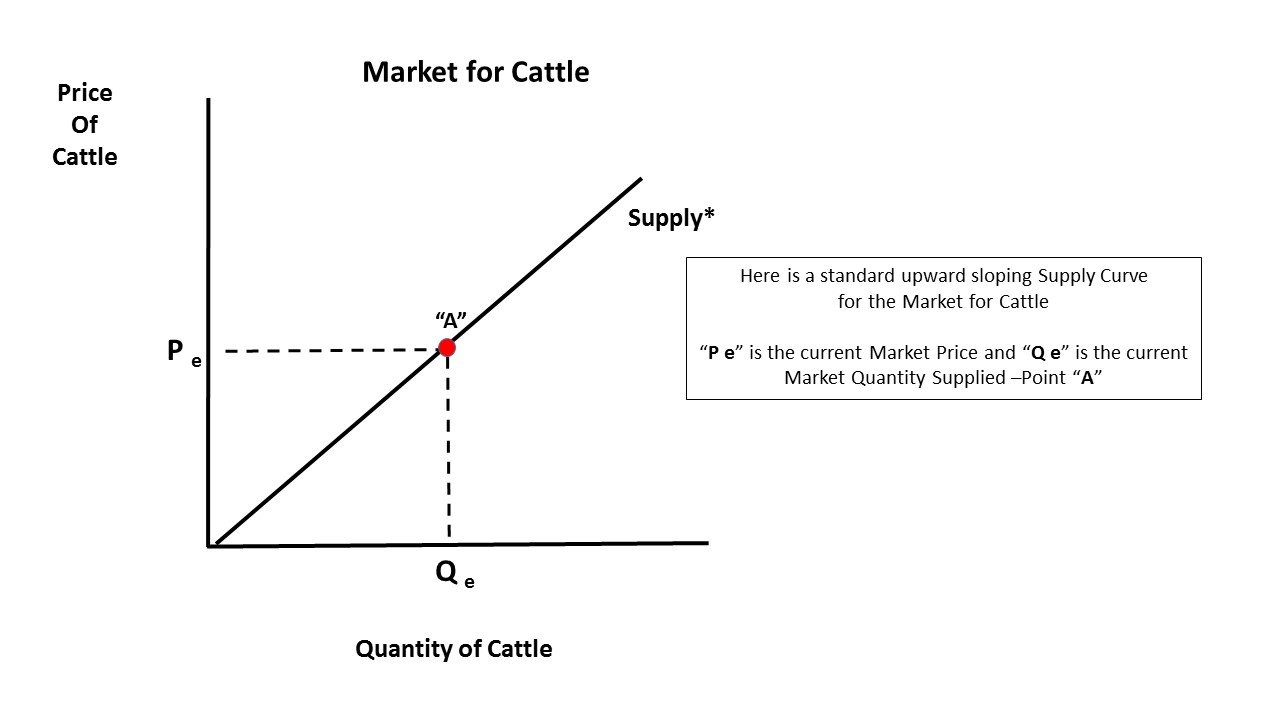
Here are some slides that will help explain the difference. Hope it helps!


Monday, August 15, 2016

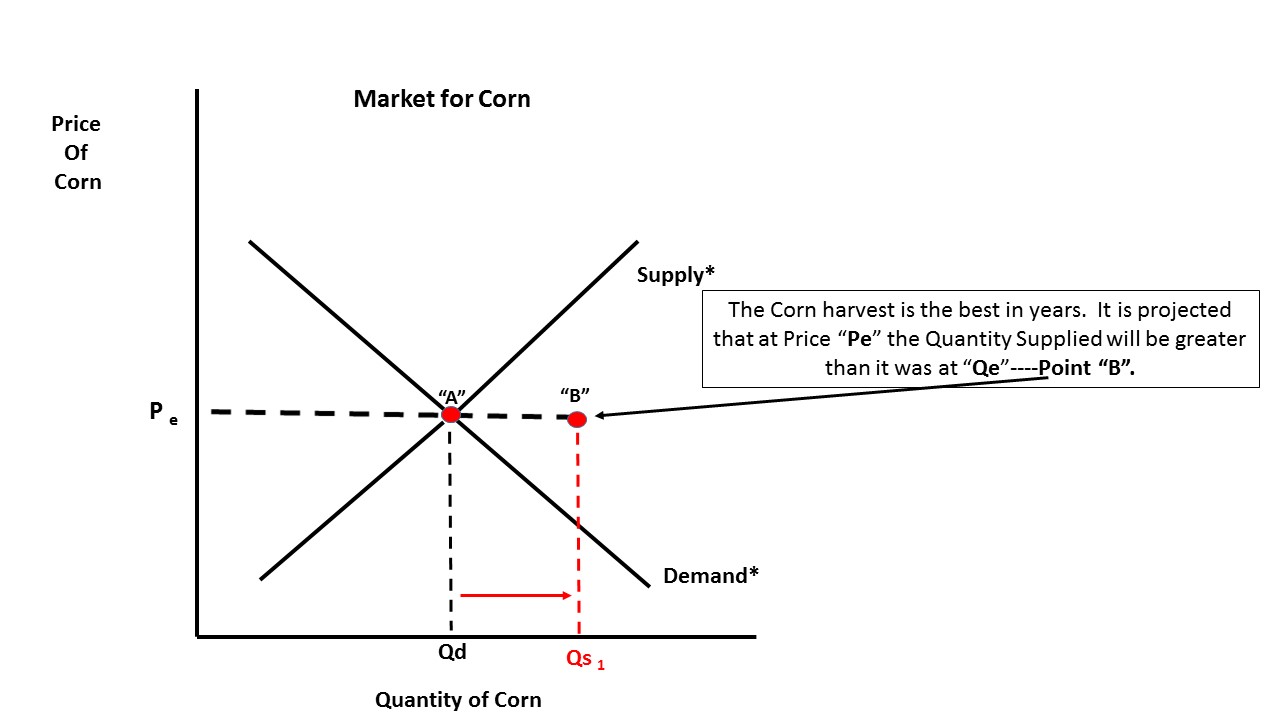
A supply and demand lesson with agriculture in one snapshot of a webpage...Oh, and I made some graphs too!

A supply and demand lesson with agriculture in one snapshot of a webpage (Morning Ag Clips)


Lower prices are NOT what farmers want to hear!

While not an exhaustive list, there are basically 3 things that can happen with Agricultural policy in the US that can affect the market for corn assuming the condition presented above---(1) buy up the surplus or (2) use subsidies or (3) do nothing.

I put together some slides to illustrate how each policy may affect the market.


View My Stats